Sofia on a Budget: My Pre-Trip Planning Guide
Some links on this page are affiliate links. If you book through them I may earn a small commission at no extra cost to you. I only link to things I use or would use.
In a few days I’m off to Sofia, the Bulgarian capital, for six nights, from Tuesday 10 to Monday 16 November. It’s new territory for the Blithe in… series, and it keeps coming up as one of the cheapest capitals in Europe. Before I go, I like to do my homework: how I’ll get in from the airport, what things cost, and which free stuff is worth my time. This is that homework, written up so you can use it too. A Blithe in… video and an “after” update will follow once I’m back.
Getting there: a Ryanair hop from Bristol
I’m flying Ryanair from Bristol, leaving mid-afternoon and landing in Sofia at about nine in the evening local time. Bulgaria is two hours ahead of the UK, so it’s a short afternoon in the air rather than a full day. I booked this flight, carry-on only, and my Sofia hotel through Trip.com. I paid £59.09 (GBP, as paid) for the flight with no hold bag.
On a budget airline, travelling light is the easiest saving there is; I’ve written about why in Carry-On Only: How I Save Hundreds on Baggage Fees. If you’re pricing up your own trip, I start by searching lots of airlines at once on Aviasales, then compare the same flight elsewhere before booking. My full method is in How I Find Cheap Flights.
The money: Sofia is on the euro now
This is the big change if you’ve read older guides. Bulgaria joined the euro on 1 January 2026, and since 1 February 2026 the euro has been the only legal tender. The old lev is gone from shops, so ignore any prices you see quoted in BGN and don’t bother hunting down leva before you go. The fixed conversion rate was 1.95583 lev to the euro, which is handy if you’re trying to make sense of an old blog post.
My usual rules still apply: pay by card where you can, always pick euros (not pounds) when the card machine asks, and keep a little cash as a safety net (more on that in my getting-around guide) for markets and small cafés. Free walking tours, for example, take tips in cash only.
Airport to the city: the metro for 80 cents
Sofia Airport has a metro station right next to Terminal 2, on line M4. It goes straight into the centre with no change: you get off at Serdika for the old town. A single metro ticket is €0.80, and you can tap a contactless bank card or phone at the barriers, so there’s no faffing at a machine after a late flight.
The timing matters for me because I land around 21:00. On weekdays the last train from the airport is currently listed at 23:33 (Saturday 23:46), so even with a slow passport queue I should make it. Expect a bit of a wait at the border too: the EU’s new Entry/Exit System means fingerprints and a photo on your first entry. The metro only serves Terminal 2, so check which terminal you land at; there’s a free shuttle bus between the two.
If you’re delayed or have heavy bags, a taxi is the backup. Use the official rank, an app or a reputable firm, never someone approaching you in arrivals. As an example, OK Supertrans lists a typical metered fare from the airport to downtown of about €13–14, with a higher night rate after 22:00. Bolt also works in Sofia, but I couldn’t verify a typical fare, so check the price in the app before you book.
Where I’m staying
I’ve booked Maria Luisa by Introvert Hotels, a boutique-style hotel right in the city centre, a few minutes’ walk from Serdika metro and close to the Central Market Hall and the Banya Bashi Mosque. Being central means I can walk to almost everything and use the metro for the rest, which saves on taxis. I booked it with free cancellation, as I explain in Where I Stay. You can compare Sofia hotels on Trip.com. Six nights cost me £212.90 (GBP, as paid), which works out at about £35.48 a night.
Getting around: day passes are cheap
Sofia’s public transport fares were set in euros from 1 January 2026, and they’re cheap:
- Single metro ticket: €0.80 (one metro journey, no transfers)
- Ticket 30+: €0.80, transfers between any transport within 30 minutes; this is the one you get when you tap a bank card
- 24-hour card: €3.00, all lines including night transport
- 72-hour card: €7.60, all lines including night transport
Validate every time you board, not just on the metro. Riding without a valid ticket gets you a €20 penalty ticket. Here’s the best bit: if you just tap the same contactless bank card every time, each trip is charged as a €0.80 Ticket 30+, and once you’ve made more than two in a day the total is capped at €2.00, the price of a day card. The charge goes through after midnight. That means tapping always works out at least as cheap as the €7.60 72-hour card over three days (3 × €2.00 = €6.00), so I’m not buying a pass. Use the same card, or the same phone wallet, every time: the system treats a physical card and its phone version as separate cards.
Free and cheap things I’m planning
A lot of Sofia’s best sights sit within walking distance of each other, which is perfect for filming on foot. My first full day will start with the Free Sofia Tour, a two-hour walking tour that runs every day of the year. It meets in front of the two lion statues outside the Palace of Justice (Sofia City Court). From 2 November 2026 the English tours are listed at 11am and 2pm daily, plus 10am on Fridays, Saturdays and Sundays. No booking needed; it’s free, and you tip what you think it was worth, in cash.
The route passes the places I want to film anyway: Sveta Nedelya Church, the Roman ruins at the Largo, the Banya Bashi Mosque, the old central baths, the Rotunda of St George, the National Theatre and the St Sofia Basilica, ending at the Alexander Nevsky Cathedral. Next to the old baths are the public mineral water taps where locals fill up bottles.
Other ideas on my list:
- Vitosha Boulevard for people-watching and a coffee, with the mountain behind it on a clear day.
- Vitosha mountain itself, if the weather’s kind.
- Central Market Hall near my hotel, for a look around and maybe lunch.
- A day trip to Rila Monastery, which I’m planning for around 12 November. Most people go on an organised tour; you can compare options on GetYourGuide. I haven’t picked a tour yet. I’ll share what it cost in the update.
Eating on a budget
I haven’t got prices yet, and I’m not going to guess. What I’ll be looking for is the same as anywhere: places busy with locals, lunch menus, bakeries for breakfast, and anything cooked on a grill. I’ll come back with real numbers in the update.
Entry, data and insurance
Bulgaria is now in Schengen, so as a British passport holder I don’t need a visa for a short stay, but the days count towards the 90-in-180-day limit across the whole area, shared with Greece where I’m going next. Always check the official GOV.UK travel advice before you go; see Visas: Always Use the Official Site.
For data I’ll be using an eSIM so maps and apps work the moment I land. Airalo has Bulgaria and Europe-wide eSIMs, which makes sense for me as I go on to Athens. And because this is the start of a much longer trip, insurance is sorted before I fly. If you’re planning something similar, my travel insurance guide for long trips covers what to look out for.
What’s next
On 16 November I fly on to Athens, and I’ll be writing up my plan for that next. Once I’m back, the Sofia video will go up on the Blithe in… channel, and I’ll update this post with what I actually spent, what worked, and what I’d skip.
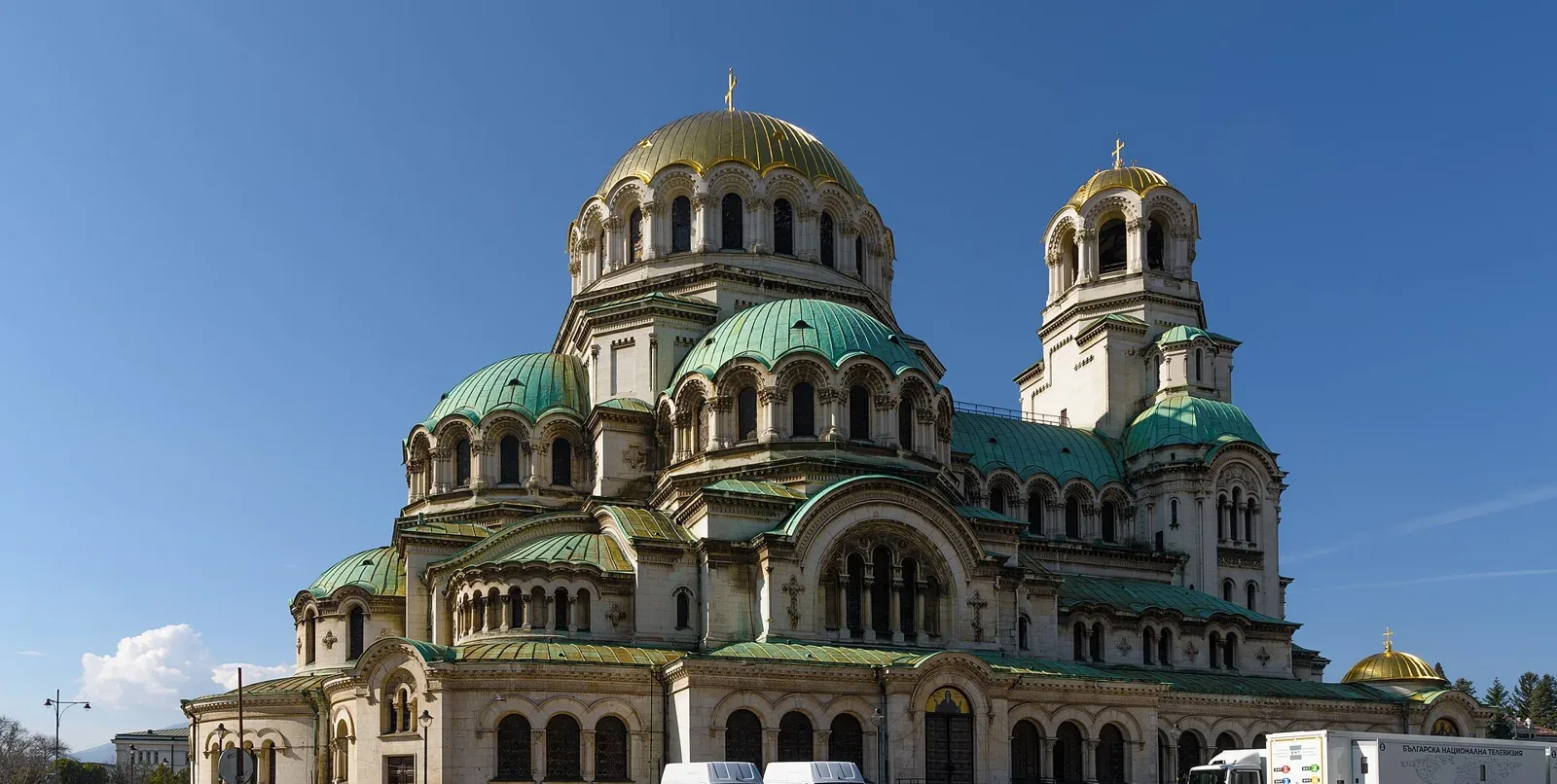
Featured photo: Saint Alexander Nevsky Cathedral, Sofia (cropped) by Julian Lupyan, public domain, via Wikimedia Commons.